











TMJ Dysfunction
Have you ever had pain, stiffness, grinding, clicking, or locking of your jaw? These are most often clear signs of TMJ (temporomandibular joint) Dysfunction. This is a common condition, affecting over 10 million people! The severity of the condition varies greatly, with some people experiencing only mild symptoms on occasion, while others suffer a great deal daily. And if you notice your symptoms getting worse, now’s the time to start taking care of it. That grinding, clicking, pain, and locking are all signs that the joint isn’t moving and functioning properly, meaning damage is being done, and without intervention that damage may very well be irreparable.

Pain, Injury, & Imaging
Many people would assume that when something hurts there is an injury; and when there is an injury it would be painful. But research and new scientific discoveries are putting a new spotlight on pain and injury, and even the methods we use to diagnose such injuries. While it’s a complex discussion with many facets, let’s keep this brief and simple.

How Walking Changes Your Body
You probably know that being active is important to maintaining your health. Most of the time when we talk about being active, we think about lifting weights, running, or taking some intense aerobics class. But did you know that walking can have a major impact on your health?

RICE vs MEAT
There’s a hot debate going on when it comes to injury recovery concerning the well-known method of RICE and the newer, lesser known method of MEAT. So let’s quickly go over what these are and then we can look at which is best and when.

Myths about muscle soreness
If you’ve ever done any activity out of the ordinary, you know what it’s like to be sore after. If you’ve done squats, you know walking up and down steps is like torture the day after. Or have your arms shaking after an intense workout. Whether you’re still working toward that New Year’s resolution of getting into shape, or just pushing yourself a bit past your normal, it’s important to be aware that there are many misconceptions about muscle soreness.

Sciatica: Is it Piriformis Syndrome or Your Lower Back?
When seeking answers for low back, hip, and leg pain, you may have heard the term Sciatica. This condition occurs when the sciatic nerve (the largest nerve in the body) is irritated or inflamed, causing pain, tingling, and/or numbness felt along part or all of the nerve path; most often starting in the low back or the buttock and traveling down the outer leg, even all the way down to the foot in some cases.

How Your Lower Back Pain & Hip Pain May be Connected
The body is intricately designed with nerve endings and connective tissues that intertwine to form a beautiful structure capable of everything from minute movements, to birthing a child, to surviving in some of the harshest conditions on earth. But with these capabilities comes vulnerability, so it’s no surprise that we experience pain from time to time at the very least. What you may not realize is that sometimes the pain you feel isn’t necessarily caused by something in the area you feel it. For example, when you have an injury to your hips or pelvis, it can often cause back pain. Due to the proximity of the complex joints of the pelvis to your spine, your body can also interpret your hip/pelvis problem as back pain and your back problem as hip/pelvic pain.

The Terms we Use in the Massage Industry & Why
Massage therapists have worked and struggled for years to educate the public on the reality of the profession; not just about the benefits of the therapy, but also to disassociate the industry from those who use the legitimacy of the profession to hide illicit activities. Television and movies haven’t helped over the years, often acting to perpetuate this unfortunate association. In an effort to combat this, there are certain terms we use as massage therapists, to maintain professionalism and separate ourselves from those not-so-professional individuals and businesses.
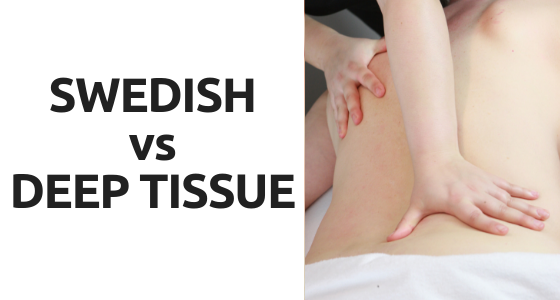
Swedish Vs Deep Tissue
There is quite a bit of misinformation and confusion around the terms deep tissue massage and Swedish massage. While you may think you know the difference between these two common massage techniques, you may be surprised by the reality of it. When you come to a massage therapist and request a deep tissue massage or Swedish massage, what you think you’re requesting and what your therapist is trained to know, may be very different. So, before we get into this I want you to clear your mind of any negative thoughts towards either one of these techniques, and open your mind to balance the information.

The Glutes: Are They the Cause of Your Pain??
Even if you’re not someone well-versed in anatomy, you’ve probably heard the term glutes, or heard of your gluteal muscles. These are the muscles that make up the majority of your buttock; and while it may seem odd to think much about this area other than how it looks in your favorite jeans, there is actually an important connection from these muscles to many other aspects of the body. They can correlate to a number of pain and movement issues that can arise through the back, hips, and legs, so taking care of this area is crucial.